The Most Exciting Part of a Hobby Is Often the Beginning
You discover something interesting.
Maybe it's watercolor painting.
Maybe it's model building.
Maybe you've always wanted to play an instrument.
You watch a few videos, browse supplies, imagine what you could create, and suddenly you're excited.
Then reality arrives.
Your first painting doesn't look like the picture.
The model instructions seem more complicated than expected.
Your fingers struggle to form a chord.
And the question appears:
“Am I actually good at this?”
That's the wrong question.
During your first month, the better question is:
“Am I learning enough to want to continue?”
Your first 30 days shouldn't be about becoming impressive.
They should be about building curiosity.
WEEK 1 — Explore Without Pressure
The goal of your first week is simple:
Learn what the hobby actually feels like.
Don't buy every available tool.
Don't compare yourself with experienced creators.
Don't plan an enormous project.
Start with the basics.
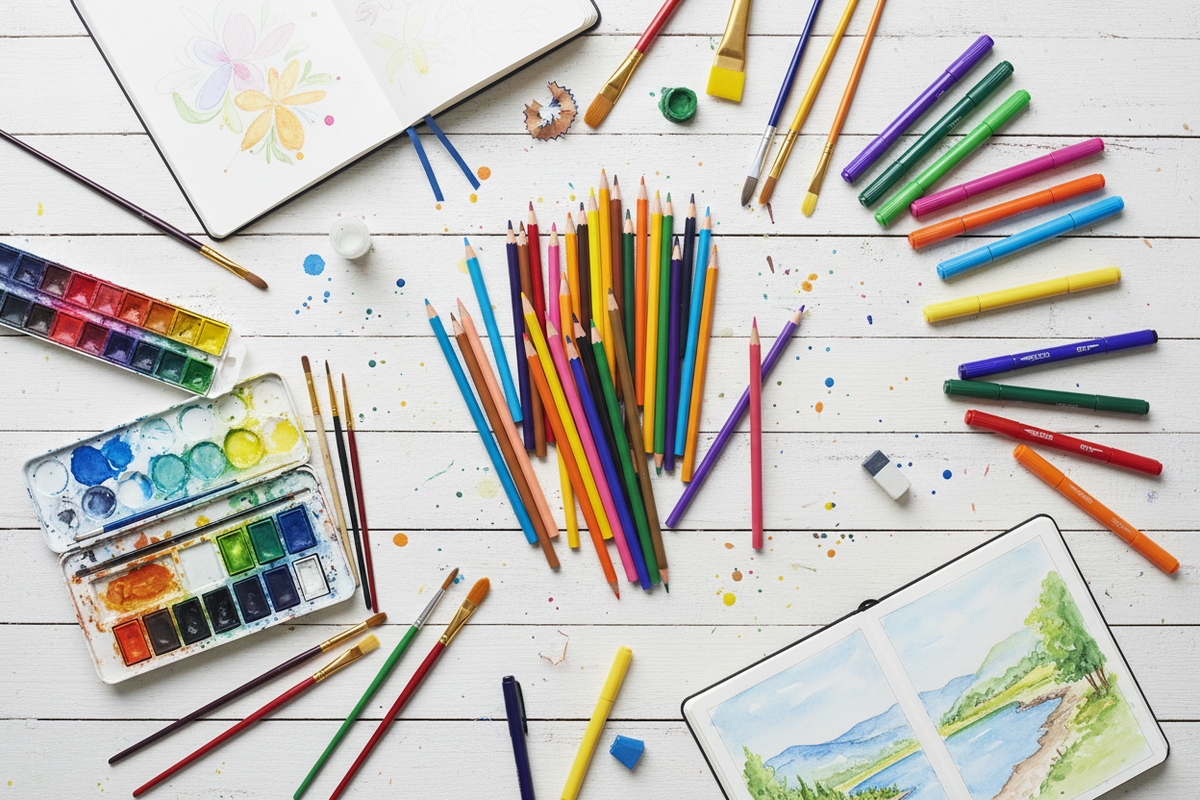
If You're Learning Watercolor
Practice:
-
simple lines
-
basic shapes
-
light and dark washes
-
color mixing
-
brush pressure
Paint a leaf.
A cup.
A simple landscape.
You're learning how the materials behave.
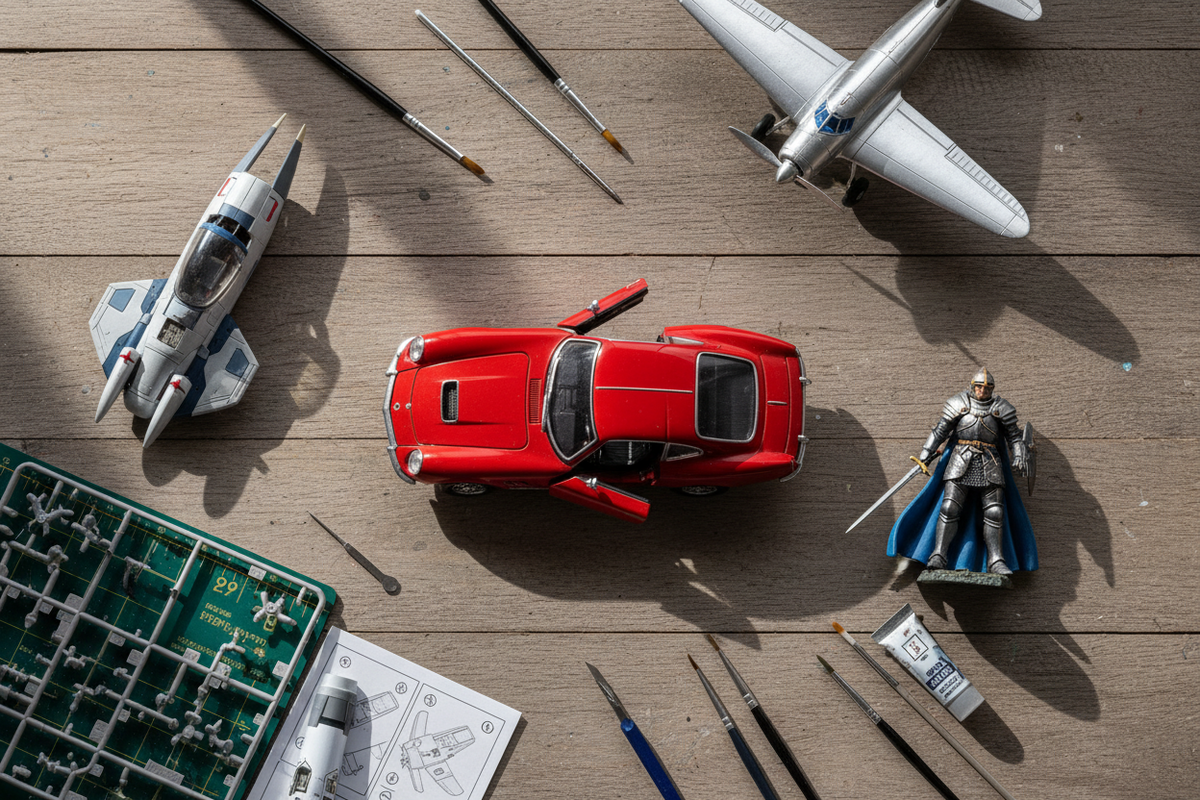
If You're Building Models
Learn:
-
how pieces are organized
-
how instructions are structured
-
which tools are actually necessary
-
how pieces fit together
-
how much pressure materials can handle
Choose an entry-level kit.
If You're Learning Music
Focus on:
Don't attempt an advanced song because you love listening to it.
Start with something you can actually play.
WEEK 2 — Build a Small Routine
Once you've explored the basics, consistency becomes more useful than intensity.
Try a simple schedule:
Tuesday — 20 minutes
Thursday — 20 minutes
Saturday — 45 minutes
That's enough.
You don't need to practice every day.
The goal is to make returning easy.
Keep Your Supplies Visible
A hobby hidden inside three boxes at the back of a closet is difficult to maintain.
Create a small ready-to-use station.
Keep your most important supplies together.
For example:
Painting Box
-
sketchbook
-
brushes
-
basic paints
-
pencil
-
eraser
Model Box
-
current model
-
instructions
-
essential tools
-
small parts organizer
Music Corner
-
instrument
-
tuner if required
-
music stand
-
practice notebook
Reduce the number of steps between:
“I feel like creating.”
and
“I'm creating.”
WEEK 3 — Complete Something
This is an important week.
Choose one small project you can realistically finish.
Why?
Because learning techniques feels different from completing something.
A finished project gives you a reference point.
It says:
This is where I started.
Your first finished piece doesn't need to be perfect.
Keep it.
Don't throw it away because your fifth project looks better.
Your first project will eventually become evidence of progress.
WEEK 4 — Make It Personal
Now begin changing things.
Use your favorite colors.
Choose a different design.
Customize your model.
Play a song you genuinely like.
Add your own details.
This is when a hobby begins becoming your hobby, rather than an exercise you're following.
Create a 30-Day Reflection
At the end of the month, answer five questions.
1. Which part did I enjoy most?
Was it planning?
Building?
Painting?
Learning?
Finishing?
2. What frustrated me?
Difficulty can reveal what you need to learn next.
3. Which tools did I actually use?
This prevents unnecessary future purchases.
4. What would I like to make next?
Your answer becomes your next project.
5. Do I want to continue?
There is no wrong answer.
Trying a hobby and deciding it isn't for you is still useful discovery.
Don't Upgrade Too Quickly
Beginners sometimes believe better equipment will instantly create better results.
Sometimes tools matter.
But skill usually matters more.
Upgrade when you can explain exactly what your current equipment prevents you from doing.
That is a much better reason than:
“The expensive version looks professional.”
Your First Month Isn't an Audition
Nobody is grading you.
You don't need to post your project.
You don't need to monetize your hobby.
You don't need to become an expert.
You are allowed to be new.
And being new can be one of the most exciting parts of learning.
Ready to Begin?
Explore HobbyLoom™:
Beginner Hobby Kits
Art & Coloring Essentials
Model Building & Collectibles
Music & Beginner Instruments
Start small. Stay curious. Let skill come later.
HobbyLoom™ — Where Creativity Takes Shape.