The Need to Unplug At the end of a long day, what do you reach for? For most of us, it’s a smartphone, a TV remote, or a laptop screen. We live in an era of constant digital stimulation, where our brains are perpetually processing emails, notifications, and breaking news. It is no wonder that burnout is at an all-time high. Yet, the antidote to this modern exhaustion might not be a new app or a vacation, but a simple pair of wooden needles and a skein of yarn.
A Craft Forged in Survival and Seafaring While knitting and crochet are today associated with cozy armchairs and relaxation, their histories are deeply rooted in survival and commerce. The exact origins of knitting are heavily debated by historians, but the earliest physical examples—intricate, colorful cotton socks—were discovered in Egypt and date back to the 11th century CE. From the Middle East, the craft traveled along trade routes to Europe. By the Middle Ages, knitting was a vital, male-dominated profession. Powerful knitting guilds across Europe controlled the production of everything from warm winter garments to fine silk stockings for royalty.
Crochet, distinct because it uses a single hook rather than two needles, has a slightly more recent history. It evolved from tambour, an ancient form of embroidery, and gained massive cultural significance in the 19th century. During the devastating Irish Potato Famine of the 1840s, Irish women used incredibly fine crochet lace (known as Irish Crochet) as a desperate means of earning income to save their families. What we now view as a relaxing hobby literally kept communities alive.
The "Flow State" of Modern Fiber Arts So why, in an age where we can buy a machine-made sweater for a few dollars, has yarn crafting seen a massive resurgence? The answer lies in psychology. The rhythmic, repetitive motions of knitting and crocheting induce what psychologists call the "flow state." This is a meditative zone where your heart rate slows, blood pressure drops, and the brain releases dopamine—a natural anti-depressant. It forces you to be entirely present in the physical world, moving your hands in a continuous, productive rhythm.
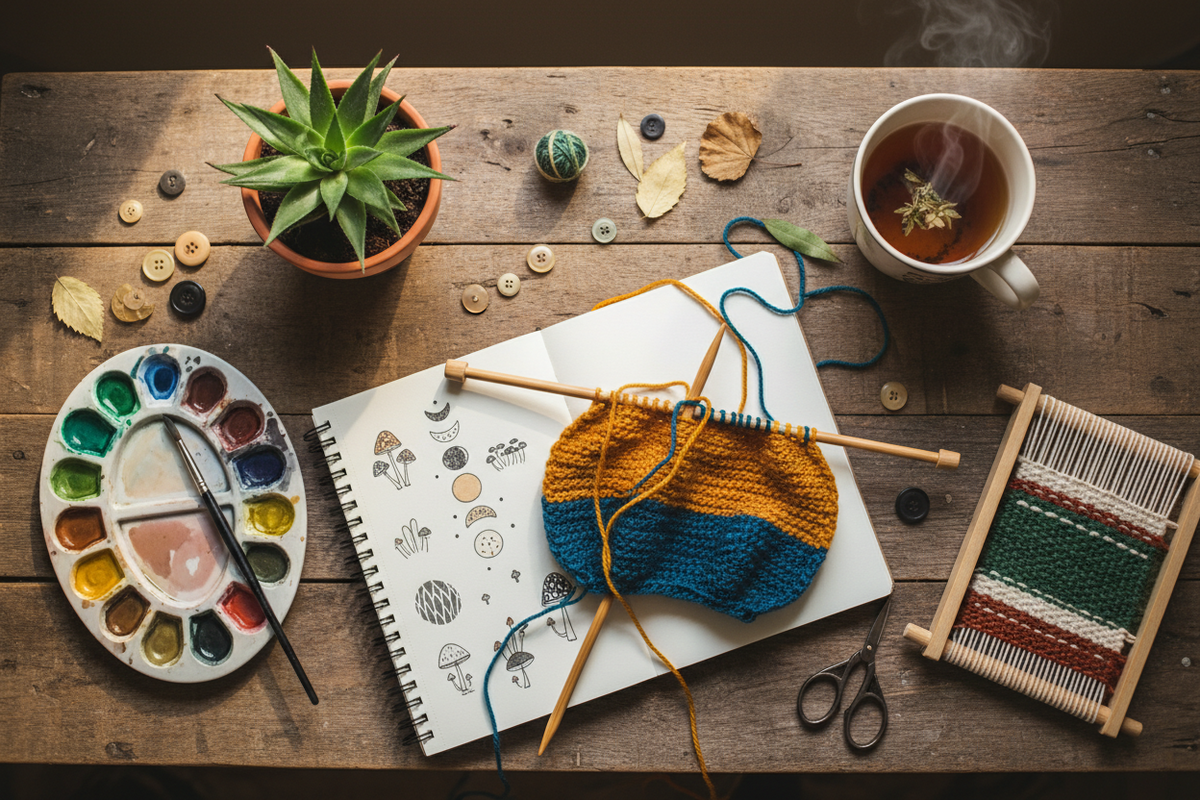
Start Your Journey with Hobby Loom You do not need to be a master craftsman to experience these benefits. At Hobby Loom, our Arts & Crafts collection features curated starter kits designed specifically for beginners. From chunky-knit blanket kits that work up in a weekend to intricate amigurumi (crocheted stuffed toys), we have everything you need to cast on your first project.
Ready to find your focus? Explore our Knitting & Crochet kits today and weave a little peace into your daily routine.