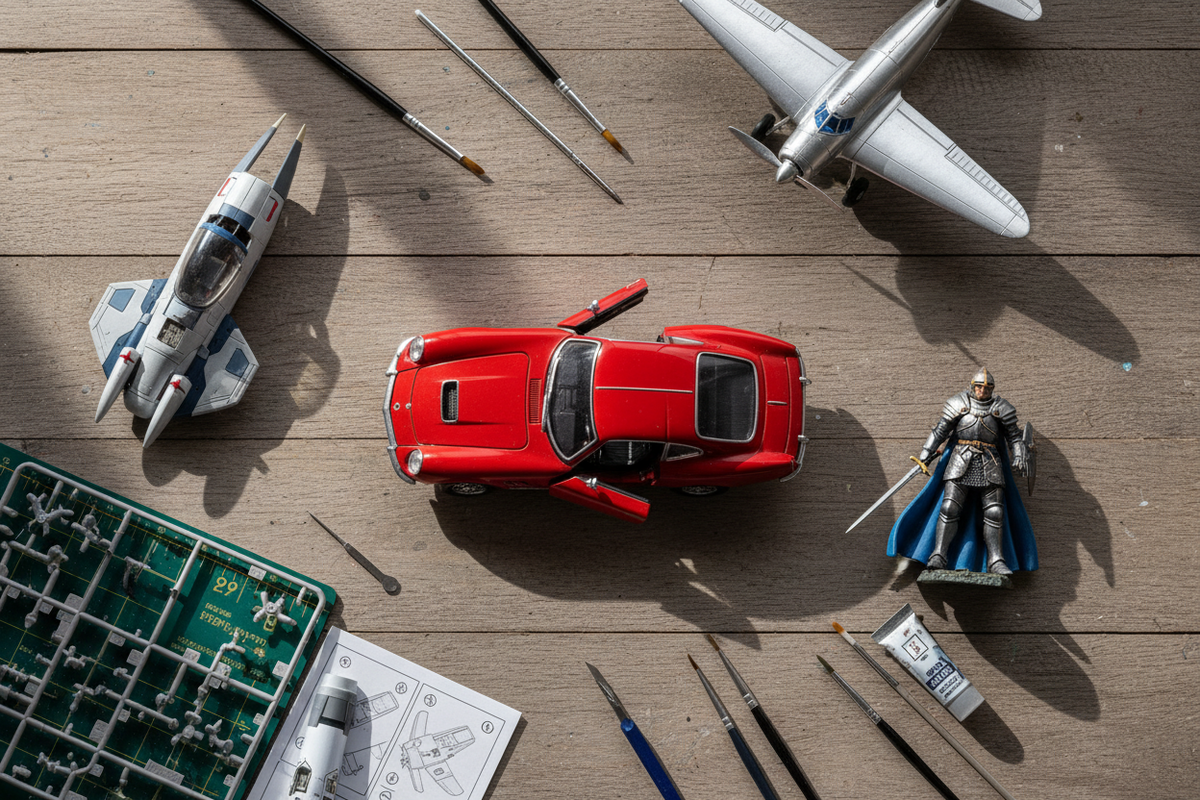
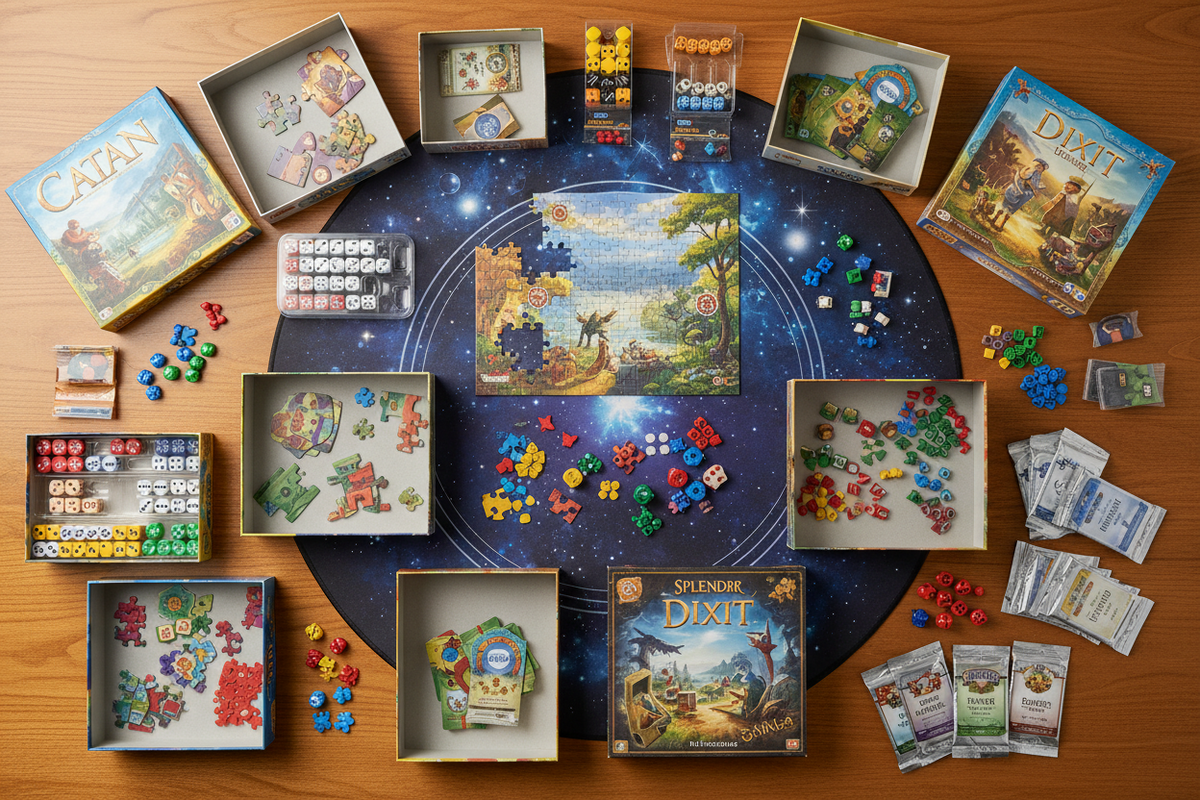
A world of color, craft, play, and possibility is waiting to be made yours.
01 / CREATE
Art & coloring
02 / BUILD
Models & collectibles
03 / PLAY
Games & puzzles
01
Discover
Something catches your curiosity.
02
Choose
Find the hobby that feels like you.
03
Create
Open the box. Pick up the tools. Start making.
Precision in Miniature: The Evolution of Metal Models
Share
Building a model from flat sheets of laser-cut steel requires steady hands, sharp focus, and an appreciation for micro-engineering. It is a massive step up from traditional snap-together plastic toys. The metal models in our Puzzles & Models collection yield incredibly sleek, museum-quality miniatures of architecture, vehicles, and spacecraft. But how did metal modeling become so precise?
The Era of Meccano and Erector Sets The origins of metal modeling lie in the early 20th century. In 1898, a British inventor named Frank Hornby grew frustrated with his children's fragile toys and invented "Mechanics Made Easy" (later known as Meccano)—a system of reusable metal strips, plates, and wheels connected by tiny nuts and bolts. Shortly after, in the US, A.C. Gilbert introduced the Erector Set in 1913. These kits were heavy, clunky, and designed to teach young boys the fundamentals of structural engineering and mechanics during the height of the industrial boom.
The Die-Cast Revolution Following World War II, the popularity of zinc alloy die-casting gave rise to incredibly popular brands like Matchbox and Hot Wheels. While highly detailed, these were pre-assembled toys, not building hobbies. The true builder craved the experience of assembly, leading to the dominance of plastic model kits (like Airfix and Revell) for several decades.
Lasers and the Modern Sheet Metal Model The revolution that brought us today's intricate metal models was the advent of commercial laser-cutting and photo-etching technology. Instead of casting heavy metal or molding plastic, manufacturers could use lasers to cut microscopic lines into ultra-thin sheets of stainless steel. This allowed for folding tabs and slots so precise they didn't require a single drop of glue. Today, tackling a metal model from Hobby Loom is a mesmerizing puzzle. As you bend the flat steel into a complex 3D structure, you are experiencing the absolute cutting edge of manufacturing technology right at your desk.