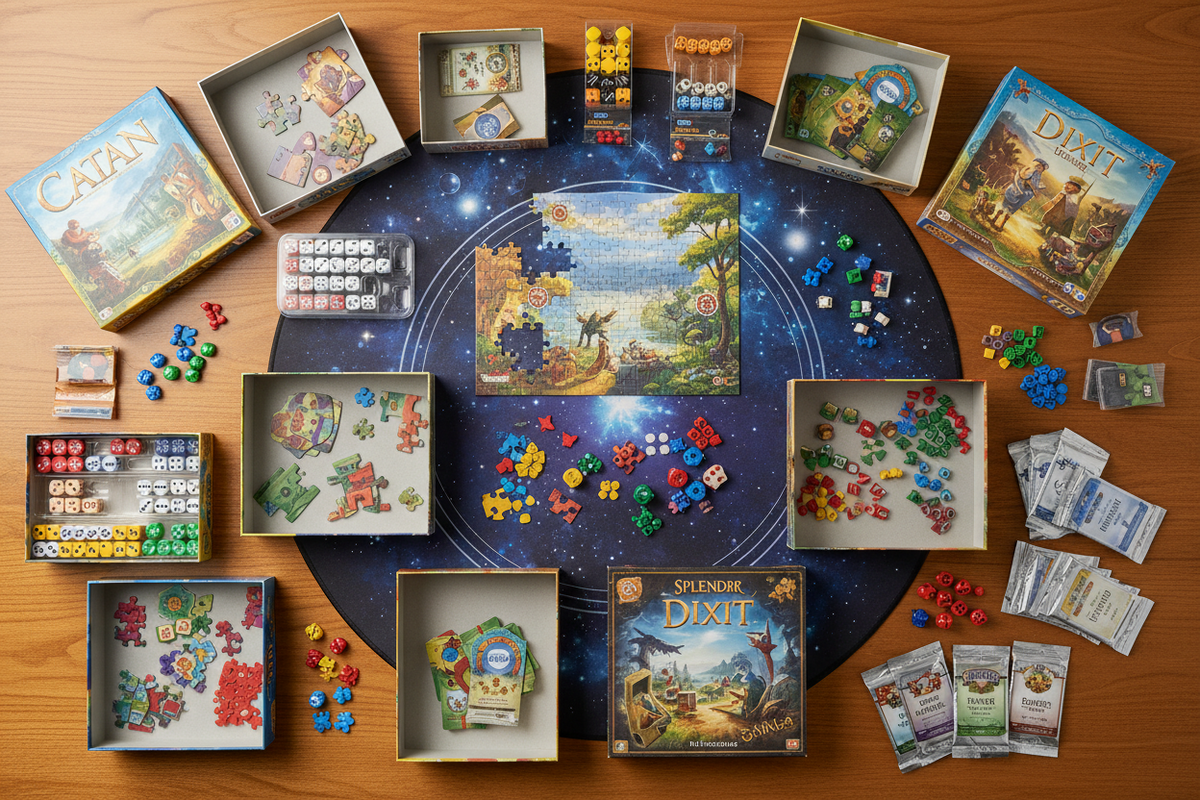
A world of color, craft, play, and possibility is waiting to be made yours.
01 / CREATE
Art & coloring
02 / BUILD
Models & collectibles
03 / PLAY
Games & puzzles
01
Discover
Something catches your curiosity.
02
Choose
Find the hobby that feels like you.
03
Create
Open the box. Pick up the tools. Start making.
Building the Future: How Interlocking Blocks Changed Play and Design
Share
Introduction Whether you are 8 or 80, the satisfying "click" of two interlocking blocks snapping together is a universal joy. Building blocks have evolved from simple wooden toys into complex, adult-oriented engineering and architectural sets found in our Tech & Maker collections. They challenge our spatial reasoning and reward our patience. The history of the building block is a testament to human ingenuity.
The Philosophy of the Wooden Block (17th Century) The concept of the building block as a developmental tool is widely attributed to the English philosopher John Locke in the late 1600s. Locke believed that learning should be enjoyable, and he suggested using wooden blocks with letters of the alphabet to teach children to read. By the 19th century, Friedrich Fröbel, the inventor of the Kindergarten concept, heavily integrated geometric wooden blocks ("Fröbel Gifts") into his curriculum to teach children about structure, balance, and creativity.
The Invention of the Interlocking Brick (1939) While wooden blocks were great, they lacked stability; one bump of the table and a masterpiece was ruined. The solution came in 1939 when a British toy maker named Hilary Page invented "Kiddicraft Self-Locking Building Bricks." These early plastic bricks featured studs on top and a hollow bottom, allowing them to firmly grip one another. A few years later, a Danish carpenter named Ole Kirk Christiansen, who had founded a company called LEGO, adapted and refined this design, eventually patenting the familiar tube-and-stud coupling system in 1958.
The Maker Generation Today, building systems are no longer just for kids building colorful houses. The modern builder tackles thousands of pieces to construct historically accurate architectural landmarks, functioning mechanical gear systems, and intricate pop-culture models. At Hobby Loom, we celebrate the fact that the desire to build and engineer never truly leaves us. It is a hobby that perfectly balances the logical left brain with the creative right brain, proving that we are all architects of our own imagination.