A Puzzle Is More Than a Picture Waiting to Be Finished
A box of puzzle pieces may look simple.
But once you begin, every piece becomes a small question.
Where does it belong?
Which color matches?
What shape fits?
Gradually, a larger image begins to emerge.
Puzzles offer a combination of visual discovery, patience, and problem-solving.
And there are many ways to make the experience even more interesting.
1. Choose the Right Puzzle Difficulty
Beginner puzzles should feel inviting rather than overwhelming.
Consider:
-
Piece count
-
Image complexity
-
Color variation
-
Piece size
-
Available table space
-
Time commitment
A smaller puzzle with a detailed image may be more challenging than a larger puzzle with clearly separated colors.
Choose according to your experience and interests.
2. Create a Dedicated Puzzle Station
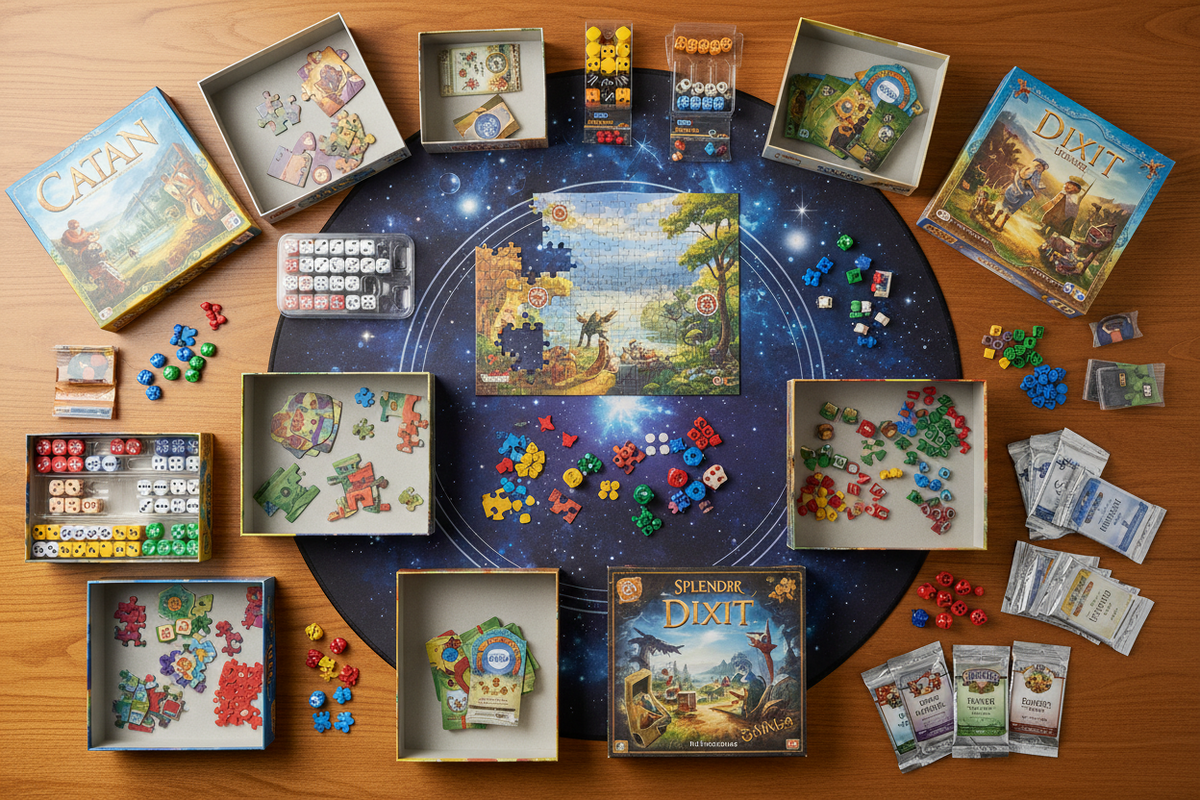
Use a stable table or portable puzzle board.
Keep pieces organized with trays or shallow containers.
Choose good lighting and enough room to sort pieces.
A dedicated station makes it easier to return to the puzzle without starting over.
3. Try Different Sorting Strategies
Many puzzlers begin by separating edge pieces.
Others organize by color, texture, or image section.
Experiment with several approaches.
For example:
-
Sky pieces
-
Building pieces
-
Plant details
-
Text
-
Distinctive patterns
There is no universal best method.
Choose the strategy that works for the image.
4. Challenge Yourself With a New Theme
If you usually choose landscapes, try architecture.
If you love colorful illustrations, try vintage maps.
Other themes include:
-
Animals
-
Art reproductions
-
Travel destinations
-
Nature
-
Mechanical designs
-
Abstract patterns
Different images encourage different solving strategies.
5. Create a Puzzle Night
Invite friends or family members to work on a puzzle together.
Choose a suitable piece count and create enough working space.
Some people enjoy sorting.
Others prefer assembling recognizable sections.
Shared puzzling can become a relaxed social activity.
6. Try a Puzzle Challenge
Set a personal goal.
For example:
Complete a small puzzle over a weekend.
Finish one section each evening.
Try a new image style.
Complete a puzzle without looking at the box image, if the difficulty is appropriate.
The goal should make the activity more interesting, not unnecessarily stressful.
7. Combine Puzzles With Music
Create a playlist that matches the puzzle's atmosphere.
A peaceful landscape might pair with instrumental music.
A colorful city puzzle might inspire an energetic playlist.
Small environmental details can make a puzzle session feel like a special occasion.
8. Display a Favorite Completed Puzzle
Some puzzles feature artwork worth preserving.
If you want to display one, use mounting or framing products suitable for that specific puzzle.
Consider the finished dimensions and follow the manufacturer's instructions.
Not every puzzle needs to be permanently mounted.
Some are more enjoyable to disassemble and complete again.
9. Create a Puzzle Journal
Record:
Over time, your journal becomes a record of your puzzle experiences.
What to Do When You're Stuck
Take a short break.
Change your sorting method.
Work on a different section.
Improve lighting.
Look for subtle patterns.
Sometimes a fresh perspective makes the next piece easier to recognize.
Recommended HobbyLoom™ Collections
Final Thoughts
A puzzle doesn't have to be a race toward the last piece.
Enjoy the process.
Notice the details.
Share the experience.
And when the final piece fits, appreciate the picture you've brought together.
Explore HobbyLoom™ and find your next puzzle adventure.
HobbyLoom™ — Piece by Piece, Enjoy the Journey.